
Beyond the Carbon Spreadsheet
For years, Environmental, Social, and Governance (ESG) reporting has been dominated by carbon accounting—calculating the metric tons of CO2 equivalents emitted by a business. While critical, this is only part of the story. At Nimbus Ascent Consulting, we advocate for a shift toward Physical Science ESG: the use of real-time atmospheric data to understand a company's direct interaction with the air, wind, and local climate systems.
The 'E' in ESG: Localized Dispersion Modeling
Air quality is no longer just a regulatory hurdle; it is a core ESG metric. By utilizing localized dispersion models, companies can track how their particulate matter, SO2, or NOx emissions travel through specific micro-climates. This transparency ensures that stakeholders see more than a single figure—they see an active commitment to regional environmental health.
Scientific Rigor for Radical Transparency
The marketplace is weary of "greenwashing." To combat this, Nimbus Ascent leverages high-resolution meteorological datasets to produce non-disputable environmental impact reports. This level of scientific rigor transforms a compliance document into a strategic asset that proves resilience to climate risks and operational integrity.
Case Study: Mitigating Particulate Drift
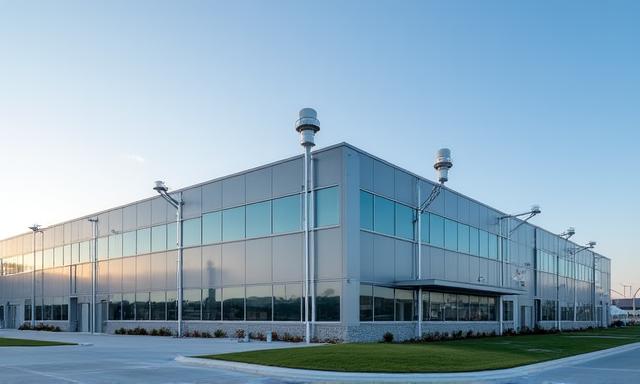
A regional manufacturing plant in Singapore faced community concerns regarding localized air quality. By integrating our Atmospheric Analytics Suite, they achieved:
- Real-time wind-pattern synchronization for production scheduling.
- A 22% reduction in neighborhood particulate drift.
- Transparent, verifiable reporting that satisfied local ESG auditors.
Conclusion: Future-Proofing Through Observation
ESG is evolving from a reactive disclosure framework to a proactive management tool. Future-proofing your organization requires continuous atmospheric observation. Understanding how the weather impacts your risk profile—and how your operations impact the weather—is the next frontier of corporate responsibility.
Ready to move beyond basic reporting?
Get a Climate Risk Assessment